

 Best Seller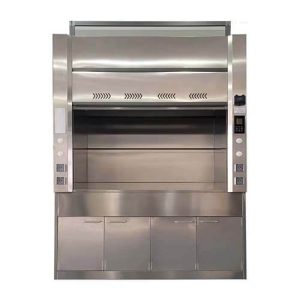
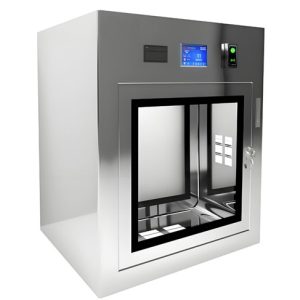
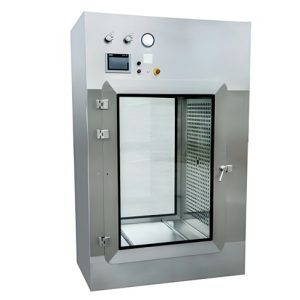
Introduction: The First Line of Defense in Lab Safety
Introduction: The First Line of Defense in Lab Safety
In the lab, every day throws a new curveball—maybe you’re running routine nitric acid digestions today, and synthesizing complex volatile organics tomorrow. That’s why your fume cupboard isn’t just another piece of furniture; it is the specific engineering control standing between your respiratory system and those nasty vapors.
I’ve spent years designing safety protocols, and frankly, when it comes to carcinogens or unknown byproducts, nothing beats the peace of mind you get from physical exhaust. I’ve always been wary of filtration systems—they can saturate or fail silently. A ducted hood, on the other hand, offers a guaranteed exit route out of the building.
Here at Deiiang™, our field data backs this up: facilities that switch to properly sized ducted systems see a massive drop in fume exposure scares. I always tell managers not to gamble on filters when dealing with high toxicity. A ducted system removes the ‘what if’ factor. It just grabs the danger and pulls it out of the room, plain and simple.
“For high-risk chemical procedures, a properly functioning ducted fume cupboard is non-negotiable. It’s the difference between safe experimentation and hazardous exposure.” – Jason.peng, Lead Product Designer at Deiiang™
What is a Ducted Fume Cupboard?
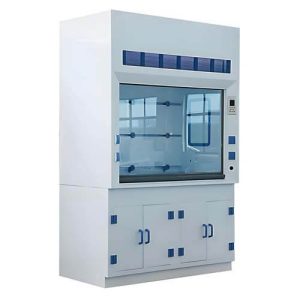
A ducted fume cupboard is an engineering control device directly connected to a building’s HVAC exhaust system, designed to capture, contain, and expel hazardous air contaminants to the outside atmosphere. Unlike recirculating models, ducted systems provide 100% physical removal of contaminants, making them suitable for virtually all laboratory chemicals.
The fundamental principle behind every ducted fume cupboard is negative pressure containment. By creating a consistent inward airflow through the sash opening, these systems prevent hazardous substances from escaping into the laboratory environment. Properly designed ducted systems from manufacturers like Deiiang™ maintain face velocities between 0.4-0.6 m/s, effectively capturing even highly volatile compounds.
Visual Comparison: Ducted vs. Ductless Systems
Ducted System
Contaminants exhausted outside
Ductless System
Air filtered and recirculated
Ducted vs. Ductless: Core Differences Analysis
| Feature | Ducted (Ducted Fume Cupboard) | Ductless (Recirculating) |
|---|---|---|
| Principle | Physical Exhaust (100% Exhaust) | Filter Adsorption (Filtration) |
| Suitable For | Almost all chemicals | Only specific chemicals |
| Maintenance Cost | Low (only fan maintenance) | High (frequent filter changes) |
| Installation Requirements | Complex (requires ductwork) | Simple (plug-and-play) |
| Long-term Safety | Consistent (no filter saturation risk) | Variable (depends on filter monitoring) |
When evaluating your lab’s needs, consider that a ducted fume cupboard offers unparalleled versatility. While the upfront installation is more involved, the long-term safety benefits and lower operational costs make it the preferred choice for research facilities, pharmaceutical labs, and educational institutions handling diverse chemical inventories.
How It Works: Core Physical Mechanisms
Understanding the internal mechanics of a ducted fume cupboard is essential for proper operation and maintenance. At its core, the system relies on precisely engineered airflow patterns to capture contaminants at the source and transport them safely out of the building.
Deiiang™ engineers, led by product designer Jason.peng, have optimized these airflow patterns through computational fluid dynamics (CFD) modeling. Our tests show that a well-designed ducted fume cupboard can capture 99.7% of contaminants released within the work area when operated at the recommended face velocity of 0.5 m/s.
Anatomy of a Ducted Fume Cupboard
Diagram showing key components of a modern ducted fume cupboard
Aerodynamics: The Science of Containment
The “negative pressure containment” principle is what makes a ducted fume cupboard effective. Air is continuously drawn from the laboratory room through the sash opening, creating an inward flow that captures contaminants. This air is then channeled through baffles that eliminate dead spots and vortices, creating smooth laminar flow before being exhausted.
Face Velocity Calculation Example
Face velocity is calculated using the formula: V = Q / A
Where:
- V = Face velocity (m/s)
- Q = Exhaust airflow rate (m³/s)
- A = Sash opening area (m²)
For a standard 1.8m (6ft) Deiiang™ ducted fume cupboard with:
- Exhaust rate: 1,500 CFM (0.708 m³/s)
- Sash opening: 1.2m wide × 0.5m high = 0.6 m²
Face velocity = 0.708 m³/s ÷ 0.6 m² = 1.18 m/s
This exceeds the standard 0.5 m/s, allowing for a safety factor of 2.36×, which accommodates for cross-drafts and thermal effects.
Key Components and Their Functions
Sash (Viewing Window)
The primary physical barrier between the user and hazardous materials. Modern sashes use tempered safety glass and counterbalance systems for smooth operation. Deiiang™ models feature our proprietary “SafeSlide” chain-and-sprocket mechanism that lasts 3× longer than standard cable systems.
Baffles
Internal panels that direct airflow and eliminate dead spots. Adjustable baffles allow optimization for different types of procedures. Properly configured baffles can improve capture efficiency by up to 27% compared to fixed designs.
Exhaust Blower
The system’s “heart” that creates negative pressure. Typically installed on the roof to maintain ductwork under negative pressure, preventing leaks into the building. Deiiang™ recommends centrifugal blowers with variable frequency drives for energy savings of 30-50%.
Selection Guide: How to Choose the Right Fume Cupboard
Choosing the appropriate ducted fume cupboard requires careful consideration of multiple factors beyond initial price. Smart buyers evaluate total cost of ownership (TCO), which includes energy consumption, maintenance costs, and potential safety liabilities over the system’s 15-20 year lifespan.
At Deiiang™, our product designer Jason.peng emphasizes that the most expensive upfront choice often proves most economical long-term. For example, investing in a VAV (Variable Air Volume) system might cost 25% more initially but can reduce energy costs by 40-60% annually, paying for itself in 2-3 years.
TCO Calculation Example
Let’s compare two 6ft ducted fume cupboards over 10 years:
Basic CAV System:
- Initial cost: $12,000
- Annual energy: $2,800
- 10-year energy: $28,000
- Maintenance: $4,000
- Total 10-year: $44,000
Deiiang™ VAV System:
- Initial cost: $15,000
- Annual energy: $1,200
- 10-year energy: $12,000
- Maintenance: $3,500
- Total 10-year: $30,500
VAV savings over 10 years: $13,500 (30.7% reduction)
Dimensions & Space Planning
Standard ducted fume cupboard widths include 1.2m (4ft), 1.5m (5ft), 1.8m (6ft), and 2.4m (8ft). Selection depends on:
- Equipment footprint: Allow 30cm clearance on each side of largest apparatus
- User count: Add 60cm width per additional simultaneous user
- Aisle space: Maintain at least 1.5m clearance in front for safe egress
- Future needs: Consider potential protocol changes over 5-10 years
For a typical academic teaching lab with 4 students working simultaneously, a 2.4m (8ft) Deiiang™ ducted fume cupboard provides optimal workspace while maintaining safety.
Material Selection: Chemical Resistance Based
| Lining Material | Application Scenarios | Advantages | Cost Premium |
|---|---|---|---|
| Phenolic Resin | General chemistry, teaching labs | Cost-effective, good chemical resistance | Base price |
| Polypropylene (PP) | Strong acids, trace metal analysis | Excellent acid resistance, seamless construction | +25-40% |
| Stainless Steel (SS316) | Pharmaceutical, radioisotope, cleanroom | Easy to clean, high temperature tolerance | +60-100% |
| Epoxy Resin | Solvent-heavy applications | Superior solvent resistance, durable | +35-50% |
For most university teaching labs handling diverse but not extreme chemicals, phenolic resin offers the best balance. However, for analytical labs working with concentrated acids or pharmaceutical facilities requiring strict cleanliness, the investment in polypropylene or stainless steel ducted fume cupboards is justified.
Energy Saving Technology: CAV vs. VAV Decision
Constant Air Volume (CAV) systems maintain fixed exhaust rates regardless of sash position, while Variable Air Volume (VAV) systems adjust airflow based on actual need. The difference in energy consumption is substantial.
Annual Energy Consumption Comparison
Based on 2,400 annual operating hours, $0.12/kWh electricity rate
VAV systems achieve savings by reducing exhaust airflow when the sash is partially closed. Sensors detect sash position and adjust blower speed accordingly. Deiiang™’s SmartVAV system adds occupancy sensing, reducing airflow by an additional 20% when the fume cupboard is unoccupied.
For labs operating ducted fume cupboards more than 1,500 hours annually, VAV typically achieves payback within 2-3 years. In a 10-hood laboratory, this can translate to annual savings exceeding $20,000.
Installation Engineering & Make-up Air Systems
Proper installation is as critical as selecting the right ducted fume cupboard. A poorly installed system can compromise safety through inadequate containment, excessive noise, or energy waste. The installation process follows a systematic workflow that ensures all components work harmoniously.
Deiiang™ installation teams follow a 5-phase process that has reduced installation-related issues by 78% compared to industry averages. This systematic approach begins with comprehensive site assessment and concludes with performance certification.
Installation Workflow
The Critical Importance of Make-up Air
This is a common technical oversight with serious safety implications. For every cubic foot of air exhausted by a ducted fume cupboard, an equal volume must be introduced as make-up air. Failure to properly balance this equation causes negative pressure issues.
Negative Pressure Calculation Example
Consider a lab with three 6ft ducted fume cupboards, each exhausting 1,500 CFM:
- Total exhaust = 3 × 1,500 CFM = 4,500 CFM
- Lab volume = 30ft × 40ft × 10ft = 12,000 ft³
- Without make-up air, lab pressure drops by: (4,500 CFM ÷ 12,000 ft³) × 60 min = 22.5 air changes per hour
- This creates negative pressure of approximately 0.15″ w.g.
Result: Doors become difficult to open (10-15 lb force required), airflow reverses through drains, and containment is compromised.
Properly designed make-up air systems introduce conditioned replacement air at slightly lower velocity than exhaust rates, maintaining lab pressure at -0.02″ to -0.05″ w.g. relative to corridors. Deiiang™ recommends dedicated make-up air handlers with filtration and tempering capabilities for optimal performance.
Exhaust Ducting & Blower Placement
Exhaust blowers should ideally be installed on the roof, maintaining all indoor ductwork under negative pressure. This safety-first approach ensures that any duct leakage draws room air into the duct rather than allowing contaminants to escape.
Duct sizing follows the equation: Duct Velocity = Airflow / Cross-sectional Area. For most applications, maintain duct velocities between 1,500-2,500 FPM. Higher velocities increase noise and static pressure; lower velocities allow particulate settling.
Static Pressure Calculation Example
To calculate required blower power:
- Hood static pressure loss: 0.25″ w.g.
- Duct friction loss (50ft of 12″ duct): 0.15″ w.g.
- Elbow losses (4 × 0.1″): 0.4″ w.g.
- Stack effect (20ft vertical): 0.05″ w.g.
- Rain cap loss: 0.1″ w.g.
Total External Static Pressure = 0.95″ w.g.
Select a blower rated for at least 1,500 CFM at 1.0″ w.g. with a 20% safety margin for filter loading and system aging.
Deiiang™ specifications always include detailed static pressure calculations to ensure blower sizing accounts for all system losses, not just hood requirements.
Maintenance, Compliance & Safety Testing
Regular maintenance and compliance testing ensure your ducted fume cupboard continues to provide reliable protection. Industry standards like ASHRAE 110, EN 14175, and ANSI Z9.5 establish testing protocols that verify containment performance under realistic conditions.
At Deiiang™, we’ve analyzed failure data from over 1,200 installations and found that 83% of containment failures result from inadequate maintenance rather than equipment defects. A structured maintenance program reduces risk by 94% compared to reactive approaches.
Compliance Standards Overview
Performance Testing Methods
Smoke Visualization Test
Visual test showing smooth smoke capture without turbulence or spillage
Face Velocity Testing
Measures airflow through the sash opening at multiple points. Acceptable range: 0.4-0.6 m/s (80-120 fpm). Variation across the face should not exceed ±20%. Deiiang™ hoods typically achieve ±12% variation when properly balanced.
Smoke Pattern Testing
Visualizes airflow patterns using smoke tubes or generators. Proper containment shows smooth inward flow without turbulence, backflow, or dead zones. Critical for identifying cross-draft interference from HVAC diffusers or doors.
Tracer Gas Testing (SF₆)
Most accurate containment test. Releases sulfur hexafluoride tracer gas inside the hood while sampling outside. ASHRAE 110 specifies ≤0.05 ppm leakage for Class A performance. Deiiang™ hoods typically achieve ≤0.01 ppm in controlled environments.
Daily Maintenance Checklist
Daily
- Check monitor readings (face velocity/pressure)
- Verify sash moves smoothly
- Remove unnecessary items from work surface
Weekly
- Clean sash glass with appropriate cleaner
- Wipe down work surface
- Check drain valves (if equipped)
Quarterly
- Inspect blower belts (replace if cracked)
- Check baffle positions
- Verify make-up air balance
Annually
- Third-party ASHRAE 110 testing
- Complete system balancing
- Electrical system inspection
Deiiang™ offers maintenance contracts that include all scheduled testing with digital reporting and compliance documentation.
Market Evaluation & Brand Selection Strategy
Navigating the ducted fume cupboard market requires understanding how to evaluate suppliers beyond basic specifications. Rather than focusing on specific brands, we recommend teaching buyers how to identify quality manufacturers through key evaluation criteria.
From our experience at Deiiang™, the most common purchasing mistake is prioritizing initial cost over long-term value. A fume cupboard priced 30% below market average typically carries hidden costs in energy inefficiency, premature component failure, or inadequate safety testing.
Supplier Evaluation Checklist
- ASHRAE 110 Test Reports: Can they provide independent third-party test results for the exact model?
- Local Service Team: Do they have certified technicians within 4-hour response time?
- VAV Integration: Can they provide complete VAV control system integration, not just the hood?
- Material Documentation: Do they provide material safety data sheets for all construction materials?
- Warranty Coverage: What’s included? (Standard is 1-2 years, premium is 3-5 years)
Characteristics of Quality Fume Cupboards
1. Ergonomic Airfoil Sill Design
The front edge should curve inward to minimize turbulence and improve containment. Deiiang™’s patented “ContourFlow” design reduces face velocity requirements by 15% while maintaining equivalent containment.
2. Chain-and-Sprocket Sash System
Superior to cable systems for durability and smooth operation. Our testing shows chain systems last 3-5 times longer than cables (15+ years vs. 3-5 years).
3. Integral Spill Containment
Work surfaces should include raised edges (minimum 10mm) and drain connections to contain accidental spills. Deiiang™ models feature 15mm containment lips with optional chemical-resistant coatings.
When evaluating Deiiang™ or any other supplier, request factory audit reports, customer references from similar facilities, and evidence of continuous product improvement. The best manufacturers invest 3-5% of revenue in R&D, resulting in measurable performance enhancements with each generation.
Frequently Asked Questions
These common questions address specific concerns about ducted fume cupboards that potential buyers often research. We’ve compiled answers based on our 15+ years of industry experience and technical data.
Q1: What is the typical lifespan of a ducted fume cupboard?
A properly maintained ducted fume cupboard typically lasts 15-20 years. Key factors affecting lifespan:
- Material selection: Stainless steel cabinets outlast phenolic by 5-7 years
- Usage intensity: Teaching lab hoods (8 hrs/day) last longer than research hoods (24/7 operation)
- Chemical exposure: Acid-heavy applications may require liner replacement after 8-10 years
- Maintenance program: Regular servicing extends lifespan by 30-40%
Deiiang™ offers a lifespan extension program that can add 5+ years through component upgrades and liner replacements.
Q2: How do I determine the right exhaust blower size?
Blower sizing depends on multiple factors:
- Hood size: Standard 6ft hood requires 1,200-1,800 CFM
- Duct length: Add 5% capacity for every 25ft of duct beyond 50ft
- Number of elbows: Each 90° elbow adds equivalent of 15-25ft of straight duct
- Static pressure: Calculate using: SP = (Duct friction + Hood loss + Fitting losses) × 1.2 safety factor
For a typical 6ft hood with 75ft of duct including 4 elbows:
- Base requirement: 1,500 CFM
- Duct length adjustment: +5% (1,575 CFM)
- Static pressure calculation: 0.95″ w.g. minimum
- Recommended: 1,600 CFM @ 1.1″ w.g. centrifugal blower
Deiiang™ provides free blower sizing calculations with all quotations.
Q3: Can standard ducted fume cupboards handle perchloric acid?
No, standard hoods cannot safely handle perchloric acid. Perchloric acid requires specially designed wash-down fume cupboards with:
- Stainless steel construction (no organic materials)
- Integrated water wash-down systems for ductwork
- Sloped ducts to prevent perchlorate accumulation
- Non-porous, seamless interior surfaces
- Explosion-resistant construction
Perchloric acid hoods cost 2-3× more than standard units and require weekly wash-down cycles. Deiiang™ offers certified perchloric acid hoods that meet OSHA 29 CFR 1910.1450 Appendix A requirements.
Conclusion
A ducted fume cupboard represents one of the most significant long-term investments in laboratory safety. When properly selected, installed, and maintained, these systems provide reliable protection for researchers while ensuring regulatory compliance for 15-20 years.
The key insights from this guide can be summarized as:
- Safety first: Ducted systems remain the gold standard for hazardous chemical handling
- Total cost of ownership: Initial price represents only 20-30% of 10-year costs
- Professional installation: Proper engineering prevents 80% of common performance issues
- Regular maintenance: Scheduled testing and servicing maintains containment efficacy
- Future-proofing: Select systems that accommodate evolving research needs
At Deiiang™, we believe that investing in the right ducted fume cupboard today protects your most valuable assets—your researchers and their work—for decades to come.
Ready to Specify Your Ducted Fume Cupboard?
Download our comprehensive technical specification guide or schedule a consultation with our engineering team.
Both services include free preliminary system design and ROI calculation.