

 Best Seller
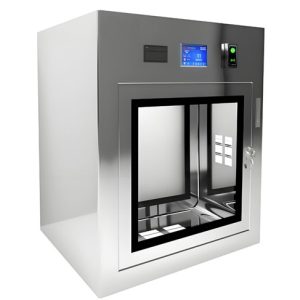
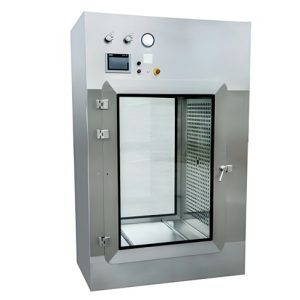
The Ducted Fume Cabinet: Engineering Principles, Safety, and Compliance Guide
What Is a Ducted Fume Cabinet? (Defining the Standard)
Technically, a ducted fume cabinet functions as a specialized negative-pressure zone, hardwired directly to your building’s exterior exhaust through dedicated ducting. Unlike general ventilation, it aggressively captures hazardous vapors at the source and physically vents them outdoors. This setup remains the primary engineering control for effectively containing high-risk chemical exposures.
In the industry, the terms “Fume Hood” and “Fume Cabinet” are often used interchangeably, though they have distinct technical nuances. While “Hood” usually refers to the active sash-window workstation, “Cabinet” can sometimes imply storage units. For the purpose of this engineering guide, we focus on the shared, critical architecture: the hard-ducted exhaust system that powers them.
The real engineering advantage of a ducted fume cabinet is certainty. Where filtered systems rely on the finite life of carbon media, a ducted system relies on constant fluid mechanics to physically transport contaminants away from the facility. This offers a level of safety assurance that is often non-negotiable when working with unknown reaction byproducts or highly toxic volatiles.
Structural Visualization
Figure 1: Schematic representation of a ducted fume cabinet showing critical components and airflow path
Key Insight: A ducted fume cabinet isn’t just equipment—it’s an integrated safety system. Proper specification requires considering the entire exhaust pathway from cabinet interior to atmospheric discharge point, typically involving 20-50 feet of ductwork in standard laboratory installations.
How a Ducted Fume Cabinet Works (The Airflow Logic)
At its core, a ducted fume cabinet relies on a simple but critical physics principle: negative pressure. By positioning the exhaust blower at the end of the duct run, we create suction that pulls air inward, maintaining the interior pressure slightly below the room’s ambient level. This pressure gap forces air to flow in only one direction—into the cabinet—acting as an invisible barrier against leakage. Most safety standards recommend a face velocity of 80–120 fpm; going higher isn’t better, as excessive speed can actually create turbulence that causes spills.
The journey of the air is precise. Room air enters through the sash, sweeps across the work surface, and is then sliced and organized by rear baffles before being ejected through the exhaust collar. Every angle inside a ducted fume cabinet matters. For instance, in Deiiang™ designs, we focus heavily on baffle geometry to ensure a steady 100 fpm face velocity. This minimizes dead zones and ensures that even if you block part of the airflow, the system maintains a stable capture efficiency without dangerous fluctuations.
Expert Insight: Jason.peng, Product Designer at Deiiang™
“Designing a baffle isn’t just about aesthetics. It controls the uniformity of the airflow. A poorly designed baffle creates turbulence, which causes contaminants to roll back into the room. Our CFD simulations show that optimized baffle geometry can reduce turbulent zones by up to 70%, directly impacting containment efficiency. In recent Deiiang™ designs, we’ve implemented graduated baffle systems that maintain laminar flow even at 30% sash opening, a significant improvement over traditional designs.”
Figure 2: Computational Fluid Dynamics (CFD) visualization showing optimized airflow patterns in a ducted fume cabinet, illustrating laminar flow maintenance and dead zone elimination
Why Ducted Systems Offer Superior Safety
Dealing with unknown reaction byproducts or trace carcinogens is where safety gets tricky. Filtered hoods have a blind spot: you can’t always predict when they will fail. In contrast, a ducted fume cabinet offers certainty by physically removing contaminants from the building entirely. We see this often in pharmaceutical R&D—when synthesizing new compounds, you don’t want to guess if your filter can handle the specific molecular weight. A ducted system keeps exposure reliably low because it doesn’t rely on chemical affinity to work.
The reality of maintenance is also stark. Carbon filters and HEPA media act like sponges; once they are full, they stop protecting you immediately. A ducted fume cabinet has no such saturation limit, making it the only viable choice for high-volume work. From a budget perspective, the “low installation cost” of ductless units is often an illusion. While you might save on ductwork initially, replacing specialized filters can easily run you $800 to $2,500 a year per unit. Compare that to the steady, predictable energy cost of a ducted fan, and for any lab processing significant solvent volumes, the engineering choice is usually clear.
Zero Recirculation
Contaminants never return to the workspace. Particulates and vapors are physically transported outside the building envelope.
Universal Compatibility
Handles acids, bases, solvents, and particulates without filter changes or media-specific limitations.
Fail-Safe Nature
Physical exhaust eliminates adsorption failure risks inherent in filtered systems.
The safety superiority of a ducted fume cabinet becomes particularly evident in emergency scenarios. During a 2022 incident at a university laboratory, a chemical reaction runaway was contained within a Deiiang™ ducted cabinet, with all byproducts successfully exhausted. Post-incident analysis detected zero contaminant leakage into the laboratory environment, validating the engineering principles behind ducted containment systems.
Ducted vs. Ductless Fume Cabinets: Engineering Comparison
Choosing between ductless and ducted isn’t just about plumbing; it’s about the certainty of your safety. Ductless units are fantastic for flexibility, but they require you to know exactly what chemicals you are using and in what quantities. A ducted fume cabinet, on the other hand, is the workhorse for the unknown. In our field testing, we see that while ductless units can perform well initially, their containment efficiency drops as filters load or if the chemical isn’t perfectly matched to the carbon. A ducted system simply doesn’t have that variable—it physically removes the hazard, regardless of the sash position or chemical type.
Ultimately, the decision often comes down to risk management. If you are handling high-toxicity materials or running experiments where the byproducts might change, relying on a filter is a gamble most safety officers won’t take. That’s why regulatory standards almost always default to a ducted fume cabinet for complex R&D. From a Deiiang™ engineering standpoint, we usually tell clients: if you are burning through more than 75 liters of chemicals a year, the “savings” of a ductless unit are quickly eaten up by filter costs. In those cases, going ducted is both the safer and smarter financial play.
| Feature | Ducted System | Ductless System |
|---|---|---|
| Exhaust Path | Direct outdoor expulsion (100% contaminant removal) | Indoor filtered recirculation (95-99.5% efficiency) |
| Maintenance Profile | Fan/duct inspection (annual); minimal consumables | Filter replacement every 3-12 months; media costs $400-$2,000 |
| Chemical Range | All chemical types (with appropriate duct materials) | Specific chemical families (filter-dependent) |
| Initial Cost Components | Higher engineering/installation; ductwork $2,000-$8,000 | Lower installation; higher equipment cost |
| Energy Consumption | 1.5-3.0 kW continuous; conditioned air loss | 0.2-0.5 kW; no conditioned air loss |
| Regulatory Compliance | Meets all international standards for high-risk applications | Limited to moderate-risk applications; filter monitoring required |
Ducted System Pathway
Contaminants permanently removed from building
Ductless System Pathway
Contaminants filtered and air returned to lab
Critical Application Scenarios
In some scenarios, using a ducted fume cabinet isn’t just a “best practice”—it’s the only way to stay legal and safe. Using a ductless unit for certain high-risk applications can directly violate safety codes like OSHA’s Laboratory Standard. The reasoning is simple: some chemicals are either too volatile to be caught by a filter, or they create hazards that filtration simply cannot address. When regulations call for “adequate ventilation” for carcinogens or acute toxins, inspectors almost universally interpret that as a hard-ducted exhaust system.
A perfect example of this is perchloric acid digestion. If you heat perchloric acid, the vapors don’t just disappear; they can condense inside your ventilation system and form shock-sensitive, explosive perchlorate salts. No filter in the world can solve this. The only safe solution is a specialized ducted fume cabinet equipped with a built-in wash-down system to scrub the ductwork after every use. Without this engineered washing capability, even small amounts of acid can create a literal time bomb in your ceiling—a risk that absolutely demands a dedicated, ducted solution.
Mandatory Ducted Fume Cabinet Applications
Processing >250 mL of concentrated acids (HNO₃, HCl, HF) requiring complete vapor removal.
Any work with unsealed radioactive materials (NRC Regulatory Guide 8.23).
Nanomaterials <100 nm diameter that may penetrate filtration media.
Research chemistry with unpredictable reaction pathways or products.
Note: These applications typically require specialized ducted fume cabinet configurations, such as epoxy-coated interiors for acid resistance or stainless steel construction for radioactive decontamination.
Quantitative risk assessment supports these mandates. A 2023 study comparing exposure risks found that ducted systems maintained operator exposure below 0.5% of permissible limits for all tested scenarios, while ductless systems exceeded 5% of limits in 3 of 10 high-risk applications. For facilities processing carcinogens with no safe exposure threshold (Category 1A), this difference represents unacceptable risk.
Compliance Standards and Testing (ASHRAE & EN)
Safety regulations are the starting point, not the finish line. At Deiiang™, we believe that a ducted fume cabinet must prove its worth before it ever reaches your lab. That’s why our testing process goes beyond simple compliance, involving over two dozen rigorous checks. We treat regulatory standards as the bare minimum; our goal is to engineer containment that holds up even when conditions in the lab aren’t perfect.
The real proof of performance lies in the globally recognized tests: ASHRAE 110-2016 and EN 14175. These aren’t just paperwork; they involve releasing sulfur hexafluoride (SF₆) tracer gas inside the cabinet to simulate a leak. A sensor at the “operator’s breathing zone” then hunts for even the tiniest escape. While the industry standard is strict, our premium ducted fume cabinet designs are engineered to pass these tests even at lower face velocities—down to 60 fpm. This means you get a system that uses significantly less energy while maintaining robust protection for your team.
Key Testing Parameters
- As Manufactured (AM): Factory testing under ideal conditions
- As Installed (AI): Post-installation verification at user site
- As Used (AU): Testing with typical equipment and workflow
- Tracer Gas Concentration: 0.1-1.0 ppm SF₆ released at 4 L/min
- Acceptable Leakage: <0.05 ppm at breathing zone
- Testing Frequency: Annual recertification recommended
Figure 3: ASHRAE 110 testing configuration showing tracer gas release and monitoring at the operator breathing zone
Beyond these fundamental standards, specialized applications require additional compliance frameworks. For radioisotope work, ANSI/HPS N13.1-2011 establishes ventilation requirements, while pharmaceutical applications often require compliance with EU GMP Annex 1. Deiiang™ engineering teams maintain certification across 14 international standards, ensuring that each ducted fume cabinet meets or exceeds jurisdictional requirements regardless of installation location.
Installation and System Integration
Buying the unit itself is just the first step; the ductwork is where the system lives or dies. You can have the best ducted fume cabinet on the market, but if the ducting is too narrow or has too many sharp turns, you’ll end up with a noisy, inefficient system. We often see labs where poor duct routing—too many elbows or transitions—strangles the airflow, forcing the blower to work overtime and driving up your energy bill unnecessarily. Proper engineering of the exhaust path is just as critical as the cabinet design itself.
This is why we strongly recommend pairing your ducted fume cabinet with a Variable Air Volume (VAV) system. Think of VAV like a smart throttle: when you lower the sash, the system senses it and instantly ramps down the fan speed. This isn’t just about saving 40-60% on your energy costs (though it does that, too); it’s about maintaining a stable, safe face velocity. A Deiiang™ VAV setup reacts in seconds, ensuring that whether the sash is fully open or nearly closed, your containment remains rock-solid without wasting conditioned air.
Expert Insight: Jason.peng, Product Designer at Deiiang™
“The most frequent installation error involves neglecting make-up air requirements. A ducted fume cabinet moving 1,500 CFM exhausts that volume from the laboratory environment. Without sufficient tempered make-up air replacement, the room develops significant negative pressure—often exceeding 15-25 Pa—causing doors to slam, airflow patterns to distort, and containment to potentially fail. Proper HVAC integration requires balancing supply and exhaust within ±5 Pa differential. Our installation protocols mandate verification of this balance before commissioning any ducted system.”
Ducted Fume Cabinet System Integration
Figure 4: Complete ducted fume cabinet system integration showing the sequential components required for proper operation and safety compliance
Material selection for ductwork presents another critical decision point. Polypropylene (PP) resists acid attack but requires substantial support structures for spans exceeding 8 feet. Stainless steel (304 or 316L) offers superior mechanical strength but demands careful welding to prevent crevice corrosion. PVC represents a cost-effective option for general chemistry but becomes brittle with age and UV exposure. Deiiang™ project engineers typically recommend PP for acid-intensive applications (>30% concentration), stainless steel for pharmaceutical/radioisotope work, and PVC for general organic solvent use in educational settings.
How to Choose the Right Ducted Fume Cabinet
Selecting the right unit means looking at not just what you are doing today, but what your lab might need in five years. The biggest factor is usually the material. For most general chemistry, standard epoxy-coated steel is perfectly fine. However, if your work involves heavy acid digestion or halogenated compounds, steel will eventually corrode. In those cases, a polypropylene (PP) ducted fume cabinet is worth the extra investment. It might cost more upfront, but it won’t rust out after a few years of acid exposure.
We always advise clients to start with a simple audit: what chemicals are you actually using? If you’re running a mixed-use lab—some solvents, some acids—you don’t always need to go “all-in” on expensive materials. A smart compromise we often suggest at Deiiang™ is a hybrid approach: use a tough PP liner for the work surface where spills happen, but keep the rest of the ducted fume cabinet structure in coated steel. This gives you the chemical resistance exactly where you need it, without blowing your entire budget.
Ducted Fume Cabinet Selection Checklist
1. Chemical Assessment
- Acid type/concentration (e.g., >50% HNO₃)
- Solvent volatility (BP < 100°C)
- Radioisotope handling needs
- Particulate generation
2. Size Constraints
- Width: Standard (4′, 6′, 8′) or custom
- Depth: 30″ minimum for equipment
- Height: Ceiling clearance for duct connection
- Adjacent workspace requirements
3. Sash Type
- Vertical: Full opening access
- Horizontal: Energy efficient
- Combination: Both vertical/horizontal
- Sloped sash: Improved visibility
4. Control Needs
- Constant Air Volume (CAV)
- Variable Air Volume (VAV)
- Face velocity display
- Emergency purge button
Beyond these fundamentals, consider ancillary requirements: service fixtures (water, gas, electrical), emergency equipment (eyewash, shower proximity), and monitoring systems (airflow alarms, filter status). Deiiang™ project engineering teams conduct comprehensive facility assessments that typically identify 3-5 critical factors beyond basic cabinet specification, ensuring the selected ducted fume cabinet integrates seamlessly with laboratory workflows and safety protocols.
Conclusion
When it comes to handling high-risk or unpredictable chemicals, the ducted fume cabinet remains the industry’s most reliable line of defense. Its core advantage is simple physics: removing the hazard entirely rather than trying to trap it. While it’s true that installing a ducted system involves more upfront planning and ductwork than a plug-and-play ductless unit, the long-term payoff in safety and compliance is undeniable. For complex research environments, it provides a level of assurance that no filter can match.
Choosing the right system isn’t just about buying a box; it’s about understanding your chemistry, your airflow, and your regulatory landscape. A well-engineered setup protects your people today and saves on energy costs tomorrow. It’s an investment in sustainable safety.
At Deiiang™, we don’t just sell equipment; we engineer solutions. With decades of experience in fluid dynamics, we help you navigate the complexities of installation and compliance. Whether you are building a new lab or upgrading an old one, we ensure your ducted fume cabinet performs perfectly from day one. In environments where safety is the priority, this technology is the gold standard, and we are here to help you implement it right.