

 Best Seller
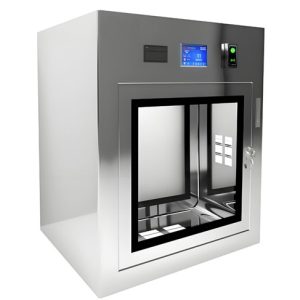
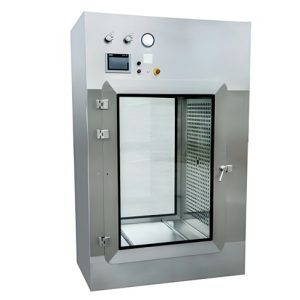
What Is a Ductless Hood?
Structural Diagram: Inside a Ductless Hood
This cross-section reveals the internal architecture of a modern ductless cabinet. Airflow begins at the sash opening, travels through the filtration stack driven by a centrifugal blower, and is returned as clean air. Key components are labeled to illustrate the recirculation path, which eliminates the need for external ducting.
Figure 1: Internal schematic of a ductless fume cabinet. The self-contained design is evident, with all critical components housed within a single unit.
How a Ductless Fume Cabinet Works
The functionality of a ductless hood relies on precise fluid dynamics. An integrated high-performance blower establishes a critical negative pressure zone within the enclosure. This pressure differential drives room air through the sash opening at a strictly controlled face velocity—adhering to the 0.4 to 0.6 m/s standard (EN 14175). This isn’t just a number; it is the aerodynamic barrier that prevents contaminants from escaping back towards the operator.
Once captured, the airstream enters the filtration stack—the engine of the system. Here, the air undergoes a multi-stage scrubbing process rather than simple passage. In a typical Deiiang™ ductless hood configured for organic solvents, the system manages an airflow of 500 to 1500 CFM. This high turnover rate ensures that the air volume within the work zone is completely exchanged and purified every few seconds, guaranteeing that only clean, filtered air is recirculated back into the laboratory environment.
Core Operational Steps:
1. Negative Pressure Intake
Contaminated air is drawn into the cabinet through the sash opening, establishing primary containment.
2. Pre-filtration
Large particulates, dust, and aerosols are intercepted, protecting the main chemical filter.
3. Main Filtration
Gaseous chemical molecules are captured via adsorption onto activated carbon or specialized media.
4. Clean Air Recirculation
Purified air is returned to the laboratory environment, conserving energy.
Airflow Dynamics & Face Velocity
Maintaining a consistent face velocity at the sash is critical for safety. This vector map illustrates how air flows into the hood. The target velocity of 0.5 m/s (100 fpm) creates a barrier that is strong enough to contain vapors but not so strong that it causes turbulence, which could lead to contaminants escaping. In a properly functioning ductless hood, velocity should not vary by more than ±20% across the sash opening.
Figure 2: Conceptual airflow vector map showing face velocity distribution. Uniform intake is vital for effective containment in any ductless fume cabinet.
Filter Technology Explained: The Core Mechanism
At the core of every effective ductless hood lies the activated carbon matrix. This is not magic; it is advanced surface chemistry. The filtration relies heavily on Van der Waals forces—physical attraction mechanisms that trap gas molecules within the massive internal surface area of the carbon pores. For complex applications, we utilize impregnated carbon (treated with agents like potassium permanganate) to trigger chemisorption, forming permanent chemical bonds with lighter molecules such as formaldehyde. In practical engineering, a high-quality carbon filter can retain 30-60% of its weight in common solvents like acetone (per ASTM D5228 standards), though this varies by chemical polarity.
Filtration within a ductless hood requires a strict dual-stage protocol. HEPA (High-Efficiency Particulate Air) or ULPA filters serve as mechanical interceptors. While a HEPA filter effectively captures 99.97% of particulates at 0.3 microns (essential for powders and biological aerosols), it remains ineffective against gas-phase molecules. The carbon filter acts as the molecular trap for these vapors. This configuration is critical: the HEPA stage must prevent physical particulates from blinding the carbon pores, ensuring the activated carbon remains available to adsorb harmful fumes.
Saturation is a certainty, not a possibility. Every carbon granule has a finite retentivity limit. Once occupied, filtration efficiency drops significantly. The critical risk here is desorption—where changes in ambient temperature, humidity, or competitive adsorption (a new chemical displacing an old one) turn the filter into a source of contamination. This is a silent, odorless failure mode. Therefore, relying solely on estimated time is dangerous; real-time saturation detection is non-negotiable. For context, while a filter might theoretically handle 500 grams of toluene, variable lab conditions dictate that safety margins must always take precedence over theoretical capacity.
Molecular Adsorption Mechanism
The left panel shows a simplified multi-layer filtration stack typical in a modern ductless hood. The right panel zooms into the microscopic world of activated carbon, where contaminant molecules (represented by hexagonal benzene rings) are trapped within the labyrinthine pore structure. This physical adsorption is reversible, which is why saturation monitoring is critical.
Figure 3: Visualization of the filtration layers and the microscopic adsorption process within activated carbon.
Key Advantages of Ductless Systems
When laboratory requirements align with its capabilities, a ductless fume cabinet offers compelling advantages, primarily centered on flexibility and operational economy. In retrofit projects, temporary labs, or buildings where structural modifications are prohibited, the ductless hood becomes the only viable option. Its design strategy dramatically lowers the technical and financial barrier to implementing local exhaust ventilation.
Consider the cost analysis: Installing a single ducted fume hood can involve $10,000 to $25,000 in construction costs for ductwork, roof curbs, and makeup air adjustments. A comparable ductless hood might carry a higher unit price but results in total project savings of 40-70% when installation is factored in. Furthermore, the energy savings are quantifiable. A standard 6-foot ducted hood exhausting 1000 CFM of conditioned air 24/7 can add over $4,500 annually to a lab’s energy bill in temperate climates (data modeled from LBNL’s “Laboratory Fume Hood Energy Model”). The same-sized ductless unit, recirculating air, eliminates this waste.
Zero Ductwork
Eliminates expensive structural work and building modifications.
Reduced HVAC Load
Saves 80-90% of the energy associated with exhausting conditioned air.
High Mobility
Easily relocated as lab layouts evolve or for temporary projects.
Plug & Play
Simplified installation—often just requires a standard electrical outlet.
Critical Limitations & Risks
Transparency regarding limitations is critical for laboratory safety. A ductless hood is not a universal solution; it has rigid operational boundaries. It is strictly prohibited for processes involving unknown reaction pathways, radioisotopes, pyrophorics, or high-thermal acid digestions (such as aqua regia). For these extreme hazards, the absolute physical removal provided by a traditional ducted system is the only acceptable standard. The ductless hood is designed to manage specific, quantified risks—it is not a catch-all safety net.
Unlike ducted systems, where safety is largely a mechanical function of airflow, the safety of a ductless hood relies heavily on procedural discipline. This technology effectively shifts the safety burden from the building infrastructure to the laboratory manager. If your facility lacks a rigorous, documented protocol for filter logging and chemical usage tracking, this technology introduces an unnecessary risk variable. The system is only as safe as the maintenance schedule you enforce.
The most significant danger is “silent breakthrough.” When a filter saturates, contaminants can pass through without any immediate visual or auditory warning. Relying on smell is reckless due to olfactory fatigue and varying odor thresholds. Therefore, safety depends entirely on redundant monitoring—utilizing electronic sensors (like PIDs) backed by manual colorimetric testing. Users must accept that this inherent need for vigilant monitoring is the trade-off for the flexibility that a ductless hood provides.
Saturation Risk Curve & Safe Change Window
Figure 4: The saturation risk curve illustrates the declining protection over time. The “Safe Change Window” is the period before the efficiency drops and breakthrough risk rises significantly. Proactive replacement within this window is essential for a ductless fume cabinet.
Ductless Fume Cabinet vs. Ducted Fume Hood
Choosing between these systems is ultimately a choice between two distinct engineering philosophies. A ducted fume hood is designed for absolute risk removal. It captures hazardous substances and physically transports them outside the building, relying on atmospheric dilution. In contrast, a ductless fume cabinet is engineered for localized risk management. It contains, adsorbs, and neutralizes threats within a finite, replaceable filter matrix. The former prioritizes broad-spectrum applicability and simplicity of safety logic (if air is moving out, you’re protected). The latter prioritizes flexibility, energy efficiency, and lower installation complexity.
This philosophical difference manifests in every aspect of design and use. A ducted hood is a permanent fixture of the building’s safety infrastructure, like a fire sprinkler system. A ductless hood is more akin to a sophisticated appliance—its safety is modular and consumable. Understanding this distinction is the first step in making an informed selection.
| Feature | Ductless Fume Cabinet | Ducted Fume Hood |
|---|---|---|
| Exhaust Strategy | Filtration & Recirculation | Exterior Extraction |
| Infrastructure | Minimal (Standard Power) | Complex (Ducts & Roof Fans) |
| Energy Impact | Low (Green / Eco-friendly) | High (Consumes HVAC Air) |
| Chemical Scope | Specific / Known Chemicals | Universal / Unknown Chemicals |
| Safety Logic | Dependent on Filtration Management | Dependent on Mechanical Ventilation |
System Layout Comparison
The contrast in infrastructure is stark. On the left, a ductless fume cabinet stands alone, requiring only floor space and power. On the right, a ducted hood is part of a larger system: ductwork snakes through the ceiling, connects to a rooftop fan (often requiring weatherproofing and sound attenuation), and necessitates a makeup air unit to replace the exhausted air. The complexity and cost multipliers are evident.
Ductless Cabinet
No external connections.
Ducted Hood
roof fan, and HVAC.
Figure 5: Conceptual comparison of system layouts. The infrastructure commitment for a ducted system is significantly greater.
Chemical Compatibility & Assessment Process
Procuring a ductless hood is not a standard catalog purchase; it is a consultative engineering process. The absolute prerequisite is the Chemical Assessment. Manufacturers like Deiiang™ require a comprehensive chemical inventory—detailing specific concentrations, evaporation rates, and frequency of use—before a unit can be approved. This data drives our adsorption modeling software, allowing us to predict filter lifespan realistically rather than theoretically. Without this validated assessment, safety is merely a guess.
Handling chemical mixtures introduces significant engineering challenges. Activated carbon exhibits varying affinity levels for different compounds. In complex mixtures, competitive adsorption becomes a critical factor: a chemical with high affinity can actually displace a previously trapped, lower-affinity molecule, pushing it back into the airstream (a phenomenon known as desorption). Additionally, reactions between captured chemicals inside the filter bed can generate unforeseen by-products. This reality is why we often recommend application-specific filter blends over generic “universal” options.
Safety assessments must distinguish between routine operations and catastrophic failures. A ductless hood is engineered to handle the steady, predictable vapor loads of daily tasks—such as pipetting or slide staining. However, it is not designed to be a containment vessel for major spills. In a “worst-case scenario” involving a significant solvent spill, a filter can be instantly overwhelmed. If your risk assessment includes the potential for high-volume volatile releases, the physical exhaust of a ducted system remains the only fail-safe option.
Chemical Validation Workflow
User Submits List
Complete chemical inventory with usage data.
Lab Analysis
Review of chemicals for compatibility and hazards.
Simulation Calculation
Modeling adsorption capacity and service life.
Approval/Rejection
Formal go/no-go decision based on safety analysis.
Filter Recommendation
Specify exact filter type and change schedule.
A rigorous, multi-step validation process is essential to ensure a ductless fume cabinet is safe for its intended use.
Standards, Guidelines & Compliance
Understanding the hierarchy of standards is essential for mitigating liability. In the ductless hood sector, two frameworks dominate. ASHRAE 110 (USA) is the gold standard for verifying containment—proving that the aerodynamic design effectively prevents leaks using tracer gas tests. However, for filtration capability, we look to AFNOR NF X 15-211 (France). This is the most rigorous global standard specifically for filtration units, as it validates not just containment, but the retention capacity of the filters over time, ensuring they perform correctly even as they approach saturation.
Regulatory bodies like OSHA (USA) and European agencies often adopt a “performance-based” stance on ductless technology. They do not explicitly ban it, but they shift the burden of proof to the employer. Compliance is not achieved merely by purchasing a certified unit; it requires a documented Chemical Hygiene Plan. You must demonstrate that the ductless hood is suitable for your specific application and that a rigorous monitoring protocol is active. In short, the hardware provides the potential for safety, but your protocols provide the compliance.
The safety redundancy mandated by AFNOR NF X 15-211 is a critical engineering concept. The standard distinguishes between Class 1 (single filter) and Class 2 (safety backup) configurations. At Deiiang™, we champion the Class 2 philosophy. By integrating a secondary “safety filter” downstream of the main filter, we create a fail-safe zone. If the primary filter saturates or suffers breakthrough, this backup layer protects the operator during the interval between detection and maintenance. In a system without external exhaust, this redundancy is not just a feature; it is the primary safety margin.
AFNOR Compliance: The Safety Margin Concept
How Class 2 Protection Works: In this scenario, the main filter has reached saturation, and a sensor has detected contaminant “breakthrough.” However, the user remains protected because the secondary safety filter actively adsorbs the escaping chemicals. This creates a safety margin, allowing time for a safe shutdown of operations and organized filter replacement without exposing personnel. This layered defense is a cornerstone of modern, responsible ductless fume cabinet design.
Figure 6: Illustration of the AFNOR Class 2 safety concept. The secondary filter provides critical protection during the main filter failure mode.
When a Ductless Fume Cabinet Makes Sense
Synthesizing all the technical analysis, we can define the ideal application profile for a ductless fume cabinet. It is a conditional solution that becomes the optimal choice when a specific set of criteria are met. It shines in environments where hazards are well-characterized, moderate, and manageable through diligent procedures. For example, in a pharmaceutical quality control lab running HPLC assays with known acetonitrile and methanol solvents, a properly sized and managed ductless hood can provide excellent protection while saving tens of thousands of dollars in installation and energy costs over its lifetime.
The decision matrix should favor a ductless system when the benefits of flexibility and efficiency clearly outweigh the added responsibility of filter management. It’s a tool for labs that value agility and have the operational discipline to support it.
Applicability Checklist: Should You Choose a Ductless Fume Cabinet?
Known Chemicals
All chemical types, concentrations, and mixtures are known and stable. No R&D with unknowns.
Intermittent Use
Operations are not continuous 24/7. Filters have time to “rest” and distribute load.
Low-Moderate Volume
Evaporation rates are low. Think milliliters per day, not liters. No large-scale solvent use.
Strict Protocol
Lab has enforced procedures for filter monitoring, testing, and replacement.
If you can confidently answer “YES” to all points above, a ductless fume cabinet is likely a suitable and advantageous choice for your application.
Common Misconceptions (FAQ)
Does filtration make it “Green”?
While the energy savings during operation are substantial and truly “green,” the full lifecycle must be considered. A ductless fume cabinet doesn’t eliminate chemicals; it concentrates them into a filter. That spent filter is now a hazardous chemical waste that must be disposed of according to stringent regulations (often RCRA in the US). Incineration or specialized landfill is required. The net environmental benefit is positive due to massive energy reduction, but it’s not a zero-waste solution. Responsible manufacturers like Deiiang™ provide take-back programs for proper filter disposal.
Are electronic sensors enough for safety?
No, they are not. Electronic sensors (PID, electrochemical, etc.) are valuable tools for continuous monitoring, but they have limitations. They have specific detection ranges, can be poisoned or fouled, may not detect all chemicals in a mixture, and have a finite lifespan. They should be part of a defense-in-depth strategy. Regular manual verification using colorimetric detector tubes is a recommended best practice. These tubes provide a direct, chemical-specific reading and are immune to electronic drift. For example, a quarterly check with an acetone detector tube can validate that your electronic sensor is still accurately reporting.
Can I convert a ductless cabinet to ducted later?
This is almost always impossible and should not be planned for. The two systems have fundamentally different airflow architectures and static pressure designs. A ductless hood is built as a sealed, positive-pressure plenum after the filter, designed to push air back into the room. A ducted hood is an open, negative-pressure plenum designed to pull air into the ducts. Attempting to modify one into the other would compromise containment, void all certifications, and likely create unsafe airflow patterns. The decision between ductless and ducted must be made at the initial purchase.
Conclusion
We view the ductless fume cabinet not as a compromise, but as a precision instrument designed for specific laboratory environments. It serves as an ideal solution when applied correctly—specifically for facilities dealing with known, moderate chemical loads where infrastructure changes are impossible. When validated by a thorough chemical assessment and backed by disciplined filter management, these units offer a blend of safety and agility that traditional systems simply cannot match.
However, procurement must be data-driven, not cost-driven. The choice to go ductless should never be based solely on avoiding construction costs; it must be the result of a documented risk analysis. Your safety relies on the synergy between the hardware and your laboratory’s culture. A ductless hood is only as effective as the monitoring protocols you enforce. We strongly recommend engaging with our engineering team for a feasibility study to ensure this technology aligns perfectly with your specific chemical applications and safety goals.